After the hero wins
In Kibitsu Shrine’s tradition, Ura’s severed head continued to make a sound after his defeat. Buried beneath a cauldron, his voice eventually became an oracle. This is the shrine’s mythology, not an archaeological claim about remains on display.
A landscape of transformations
The story follows Kibitsuhiko and Ura through a battle of arrows and transformations into birds and fish. The hills and waterways of Kibi give the legend a setting. Read it as a local tradition that connects places, rather than a literal historical account.
The cauldron hall and a living ritual
The Narukama ritual is associated with the Okamaden hall. In the legend, Ura asks for his wife Asohime to prepare rice there and uses the cauldron’s sound to communicate an omen. Prayers now require an online booking at least three days ahead, offerings from ¥5,000 and arrival 30 minutes early. Narukama takes about an hour overall and is not offered Fridays, the second Sunday of May/October or 28 December. Ask Kibitsu Shrine (+81 86 287 4111) how to request it under the new system.
Follow the corridor
Look at the distinctive main shrine buildings, then follow the long covered corridor through the grounds. Use the shrine map to find Okamaden, respect worshippers and follow photography rules. Kibitsuhiko Shrine is a separate shrine and should not be confused with Kibitsu Shrine.
A real fortress, a legendary resident
Kinojo is an ancient mountain-fortress site linked locally with Ura. Its reconstructed west gate and surviving walls introduce a separate archaeological story. Begin with the visitor information, then distinguish excavated remains from reconstructions. The site does not prove that a legendary ogre lived there.
Make two journeys, not one hurried stop
Plan the shrine as one visit and the mountain fortress as another. Check uphill access, weather, walking ability and the journey home. Kinojo is not a short stroll beside the shrine.
MAKE THE VISIT HAPPEN
Make a visit, not just a wish list.
Follow the story into the practical details: routes, admission, booking, family considerations and food.
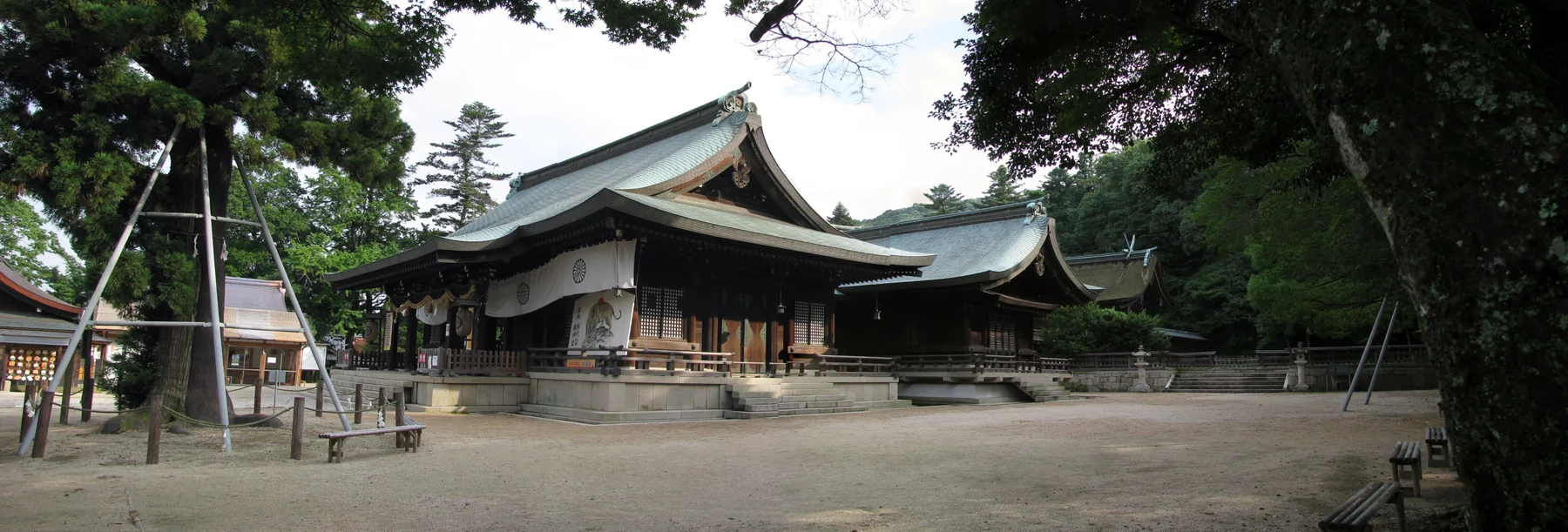 KIBITSUHIKO SHRINE · OKAYAMAOkayama · History & towns
Kibitsuhiko Shrine
Kibitsuhiko Shrine stands in Ichinomiya, northern Okayama City, at the foot of Mount Kibi-no-Nakayama. It is the ichinomiya, or principal shrine, of historic Bizen Province and venerates Okibitsuhiko-no-Mikoto, associated with the Momotaro tradition. The shrine describes its beginnings on the deity’s former dwelling site; the official history consulted does not establish a Gregorian founding year.
Grounds free. Prayer offerings: ¥5,000, ¥8,000, ¥10,000, ¥20,000, ¥30,000 and upwards; sword-and-bell purification from ¥10,000. Amulets and goshuin have item-specific offerings.
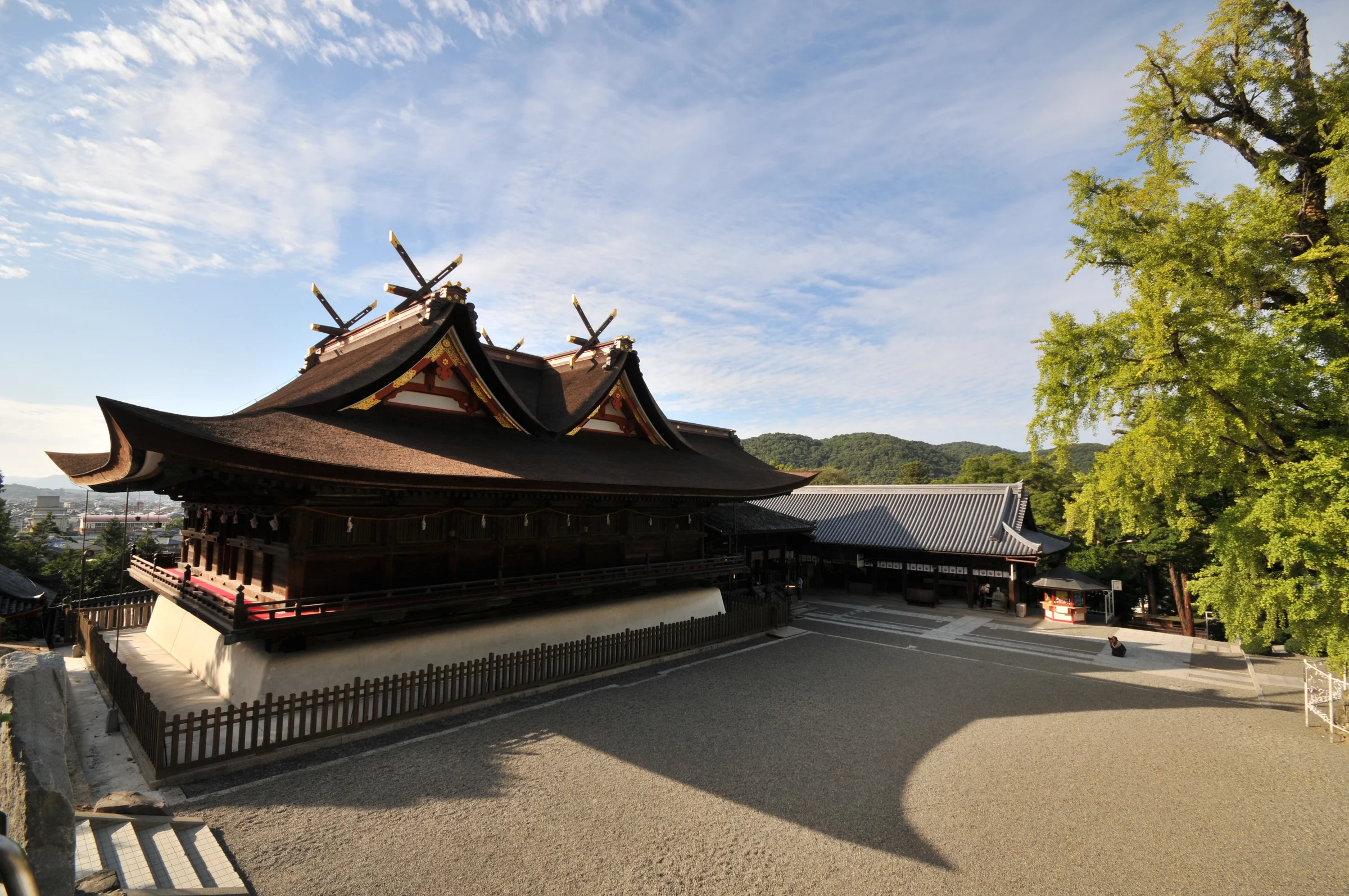 KIBI · KIBITSU SHRINEOkayama · History & towns
Kibitsu Shrine
A shrine associated with Okibitsuhiko and Ura. Its main sanctuary and worship hall were rebuilt in 1425; the paired roof form is known as Kibitsu-zukuri. The surviving buildings’ reconstruction date is distinct from the shrine’s origins.
Ordinary precinct worship free. Prayer offerings from ¥5,000 per request; Narukama also lists offerings from ¥5,000.
Soja · History & townsKinojo Mountain Fortress
Kinojo is an ancient mountain fortress site in Soja, also linked to the Ura legend. Separate archaeological remains from folklore and recognise that reconstructed gates are not unchanged ancient buildings.
No general site-entry charge listed; taxi and guided activities separate.
Soja · History & townsBitchu Kokubunji Temple
A temple with roots in the Nara-period provincial temple system; the surviving buildings were re-established in the Edo period. Its roughly 34-metre pagoda is a landmark of the Kibi countryside.
Ordinary precinct visit free.
The details, from the source.
Our guides are edited from official information. Check current opening days, prices, transport and booking rules with each operator. A source link does not imply a partnership.